

How Do You Measure Customer Service Metrics
Key Takeaways
-
Monitoring customer service metrics gives organizations insight into business health, team morale, and long-term customer loyalty.
-
Customer service metrics like satisfaction, loyalty, effort scores, team efficiency, and resolution quality present a multidimensional picture of service performance.
-
They help establish clear goals, tools, and baseline measurements, which are the foundation of continuous improvement.
-
Integrating quantitative data with qualitative feedback and sentiment analysis gives deeper insights into customer experiences.
-
Don’t fall into trappy traps like the context of metrics, silo breaking, and balanced measurement.
-
Advanced analytics and AI-powered tools provide real-time and predictive insights, allowing businesses to remain agile as customer needs evolve.
Customer service metrics are figures employed to measure how effectively support teams assist customers.
These numbers measure factors like response time, number of issues resolved, and customer satisfaction following support.
Teams leverage these metrics to identify problems, establish targets, and improve their service planning.
For agencies and teams, straightforward metrics facilitate sharing progress and refining support work over time.
Why Measure Customer Service
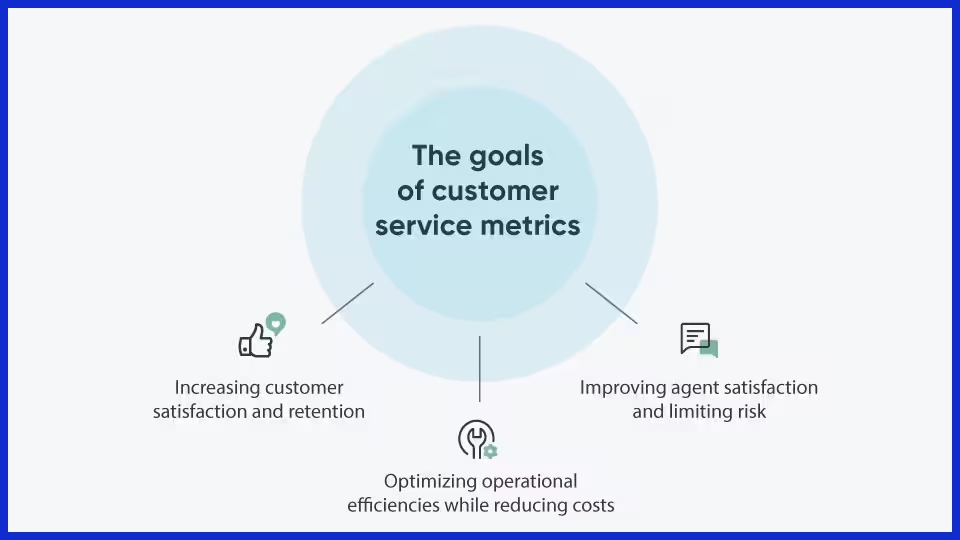
That’s why measuring customer service is key for any business that wants to deliver extraordinary experiences and stay ahead. It provides a genuine perspective on how effectively your team satisfies customers, how the company is perceived, and what areas need improvement. It defines priorities, seeks alignment, and fosters action.
Roughly three in 10 customer-service pros say measuring and improving support quality is difficult. Doing it right pays off in trust and loyalty.
Business Health
-
Customer satisfaction scores (CSAT)
-
Net Promoter Score (NPS)
-
First response time
-
Resolution time
-
Customer retention rate
-
Customer churn rate
Customer retention rates indicate whether service tactics have consumers returning. High retention indicates customers believe in your service and drops could point to issues. CSAT scores break down what works and what needs help about your service.
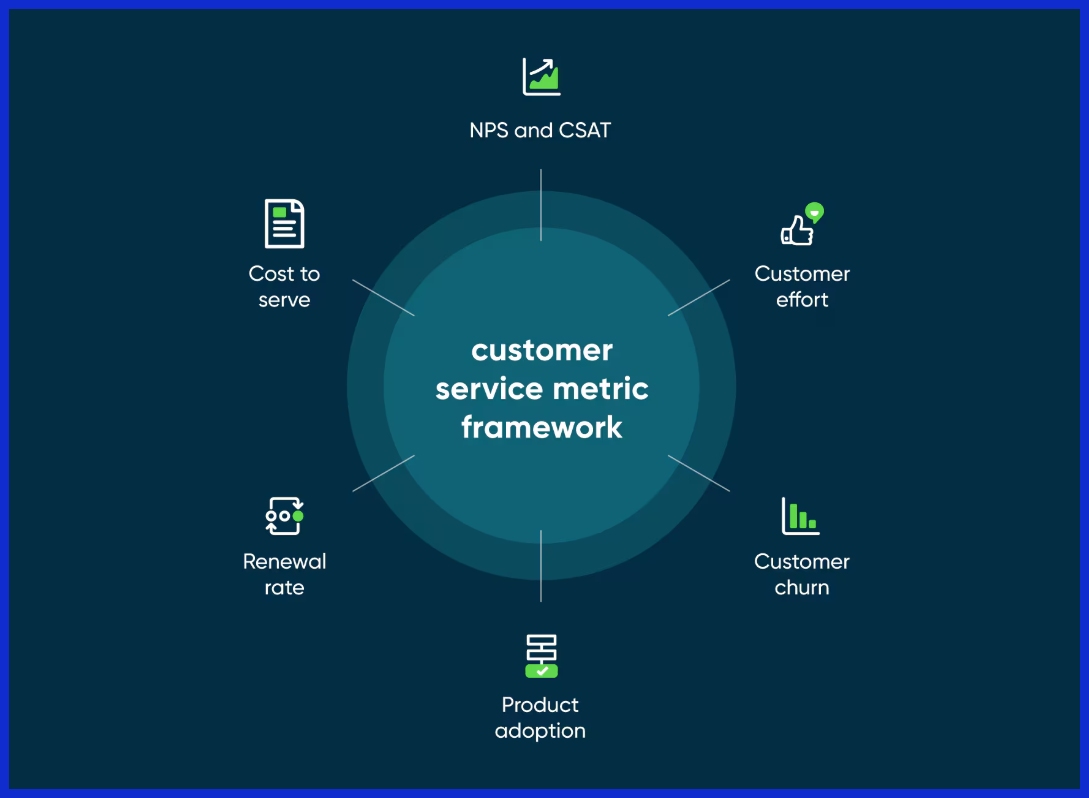
For instance, a CSAT spike following a new live chat implementation indicates it is having an impact. Churn rates measure when and why people leave, so you can address little things before they become big. Following these figures in unison provides a transparent picture of business vitality and customer sentiment surrounding your brand.
Team Morale

As important as tracking client feedback is measuring how pleased your employees are with the process. It allows leaders to determine whether tools, training, or support systems provide the team with what they need.
Metrics that emphasize individual contributions, like the most issues resolved or best customer comments, allow teams to identify who is having a strong impact. Acknowledging and celebrating these victories boosts morale and keeps employees energized.

For instance, a monthly highest satisfaction ratings award can build team spirit. When you use performance data to give targeted training, it helps staff develop new skills, which makes daily work easier and boosts morale.
Customer Loyalty
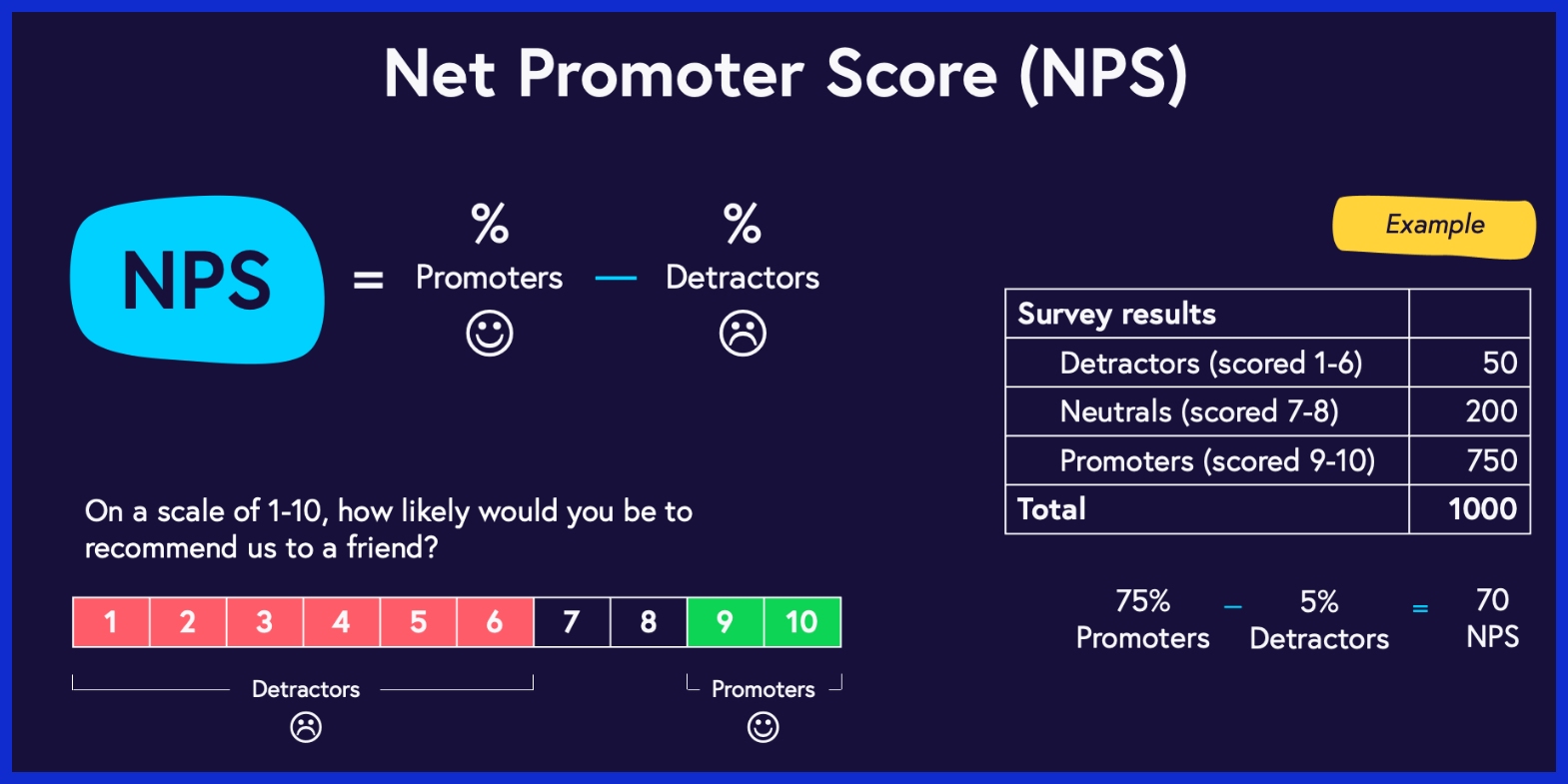
Loyalty indicators such as NPS reveal how likely customers are to recommend your business. NPS scores that are too high mean your service gets noticed. Repeat purchase rates indicate solid retention and enduring loyalty.
Understanding what brings people back through customer feedback analysis is crucial. For example, comments about quick assistance or nice employees demonstrate positives you can leverage. Companies can use this data to build referral programs or loyalty incentives.
This transforms satisfied customers into evangelists for the brand and scales the business. Measuring customer service means companies can act on data, not speculation. It minimizes customer effort, increases satisfaction, and provides teams with the feedback necessary for meaningful growth.
Essential Customer Service Metrics
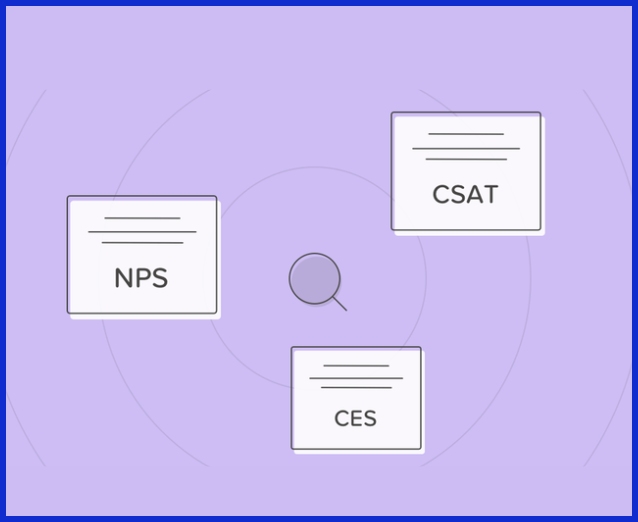
Customer service metrics play a crucial role in evaluating customer service performance, indicating the effectiveness of your support teams in satisfying customer demands. These essential metrics help brands identify blind spots, notice patterns, and monitor their customer experience in real time.
|
Metric |
Purpose |
Alignment with Business Goals |
|---|---|---|
|
Customer Satisfaction (CSAT) |
Measures customer satisfaction post-interaction |
Improves service quality and retention |
|
Net Promoter Score (NPS) |
Gauges customer loyalty and advocacy |
Drives long-term growth and referrals |
|
Customer Effort Score (CES) |
Assesses ease of issue resolution |
Reduces friction, boosts customer loyalty |
|
First Response Time (FRT) |
Tracks initial reply speed |
Enhances customer trust and satisfaction |
|
Average Resolution Time (ART) |
Measures speed of issue resolution |
Increases operational efficiency |
|
Churn Rate |
Monitors customer loss over time |
Mitigates revenue decline, informs retention |
|
Lifetime Value (CLV) |
Forecasts total revenue per customer |
Guides investment in high-value relationships |
|
Customer Sentiment |
Captures emotional tone of feedback |
Shapes brand reputation and service approach |
1. Satisfaction Scores
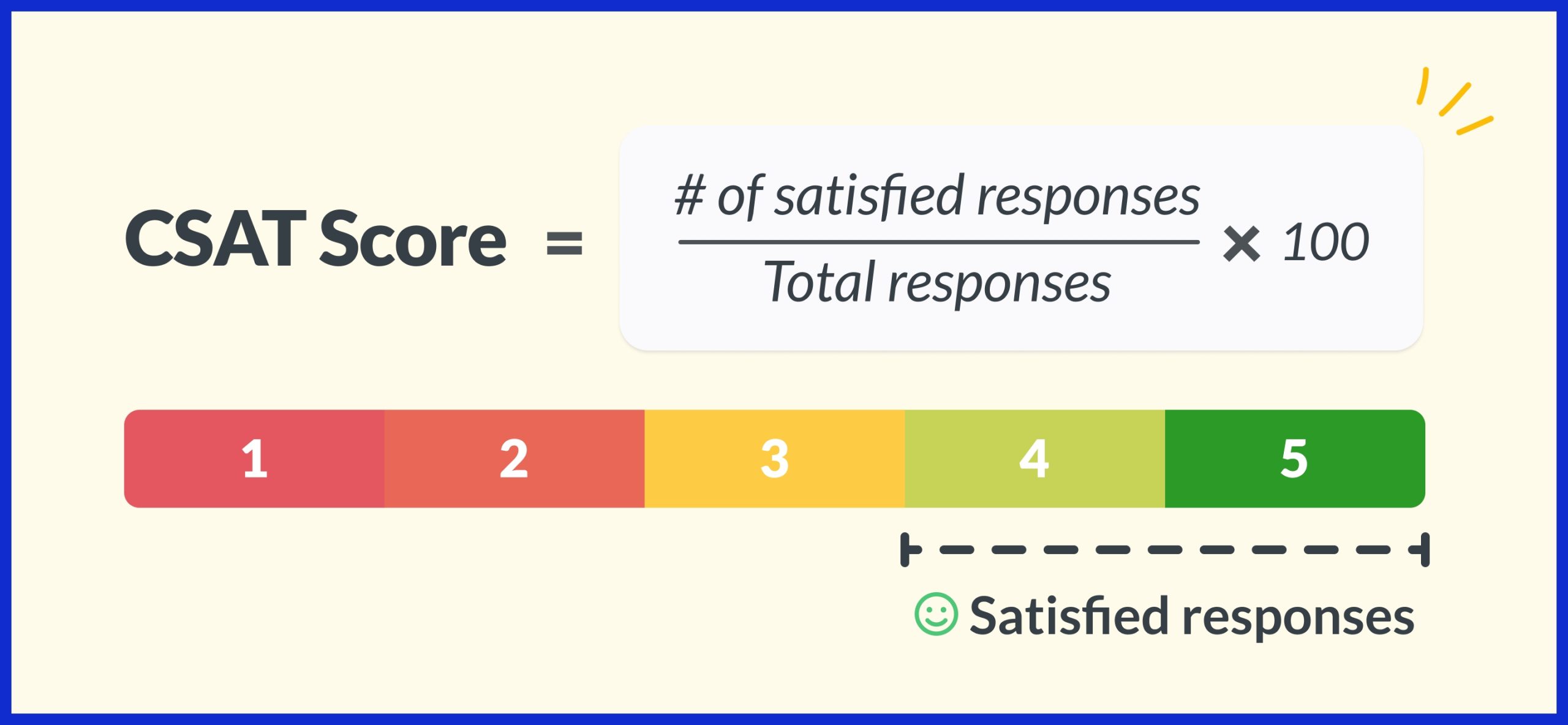
CSAT is a key way to see how well your service team is doing immediately following an interaction. It’s quantified by questions like, “How pleased were you with your experience?” Respondents select a point on a scale and the proportion of positive responses forms the CSAT score.
Surveys provide direct feedback and underscore experiences that are both positive and negative. Trend tracking of CSAT over time reveals shifts in customer perception. If scores fall following a process change, it indicates the presence of problems.
By comparing CSAT with industry benchmarks, teams can determine whether their standards meet or exceed those of the competition.
2. Loyalty Indicators
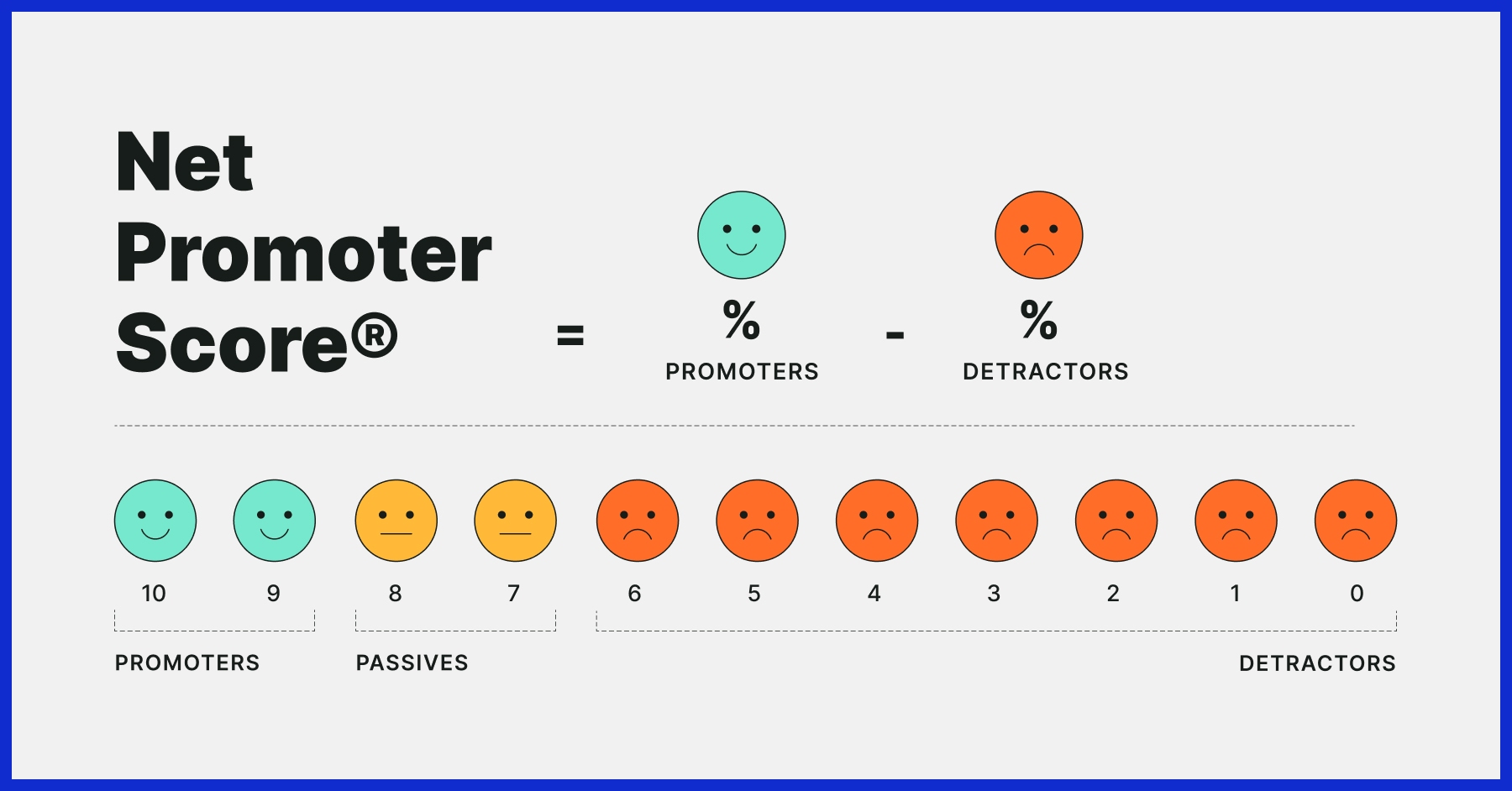
NPS, or Net Promoter Score, measures loyalty by asking whether customers would recommend the brand. Scores indicate whether individuals are promoters, passives, or detractors. A high NPS indicates strong loyalty.
Customer retention rates indicate how successfully a company maintains its customers and are frequently associated with loyalty and engagement strategies. Long-term value is reflected in CLV. Higher CLV means customers spend more and stay longer, so it helps determine where to focus retention.
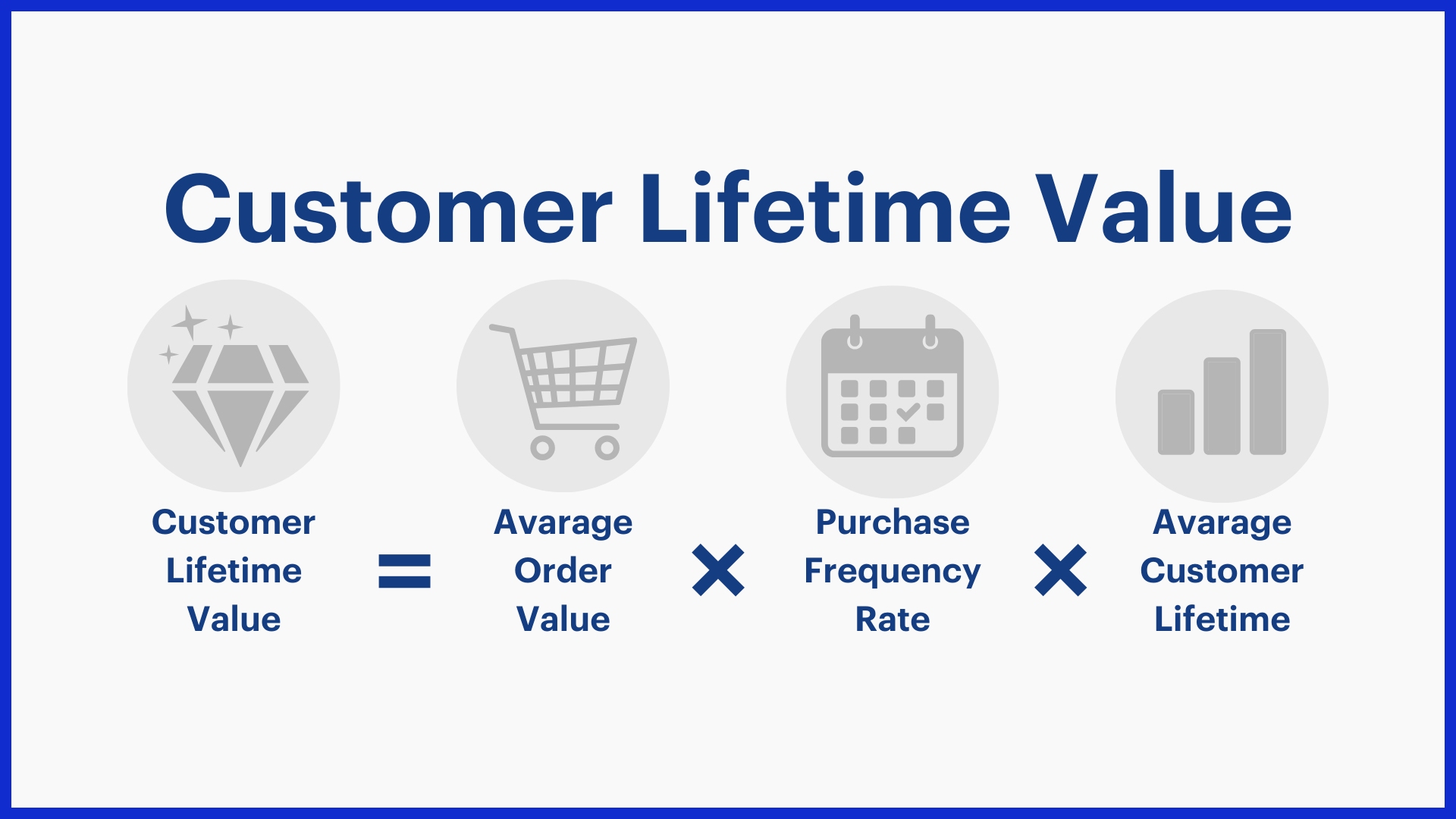
These loyalty metrics help form strategies that keep customers engaged and churn low.
3. Effort & Ease
Customer Effort Score (CES) demonstrates how simple it is for clients to address their concerns. Low effort equates to a smoother experience. Identifying friction points in the customer journey, such as unclear forms, sluggish approval processes, or unintuitive checkout flow helps reduce drop-offs.
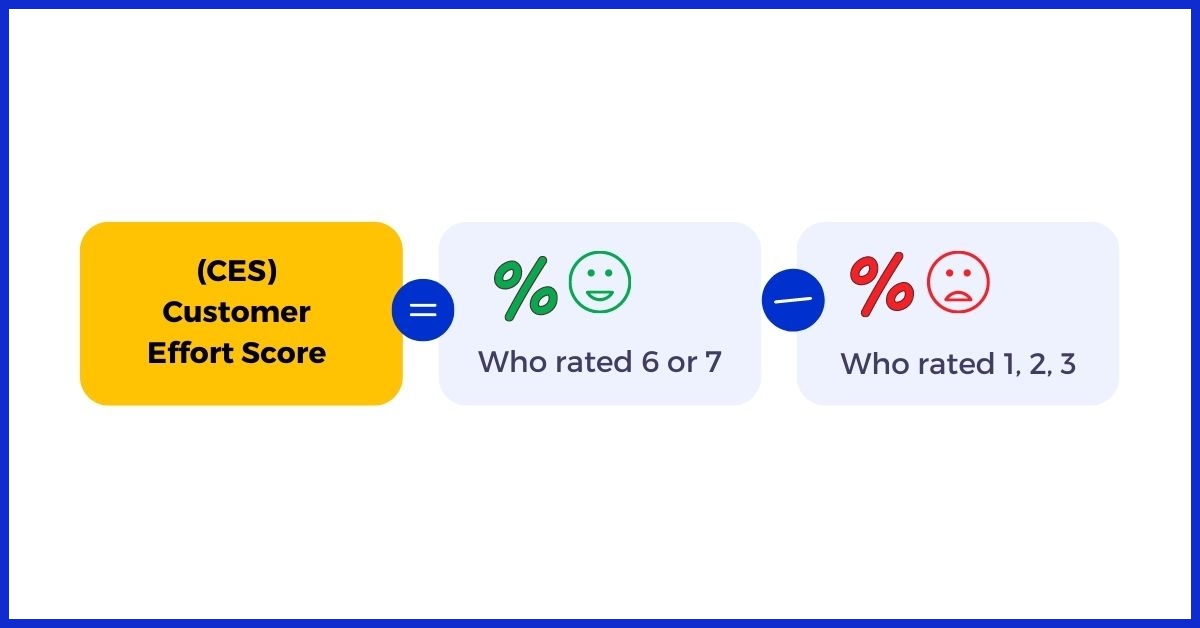
CES feedback drives service modifications. Tweaking workflows or introducing self-service options can reduce friction for users. Teams monitor effort scores to verify whether changes are effective and continue to optimize service.
4. Team Efficiency
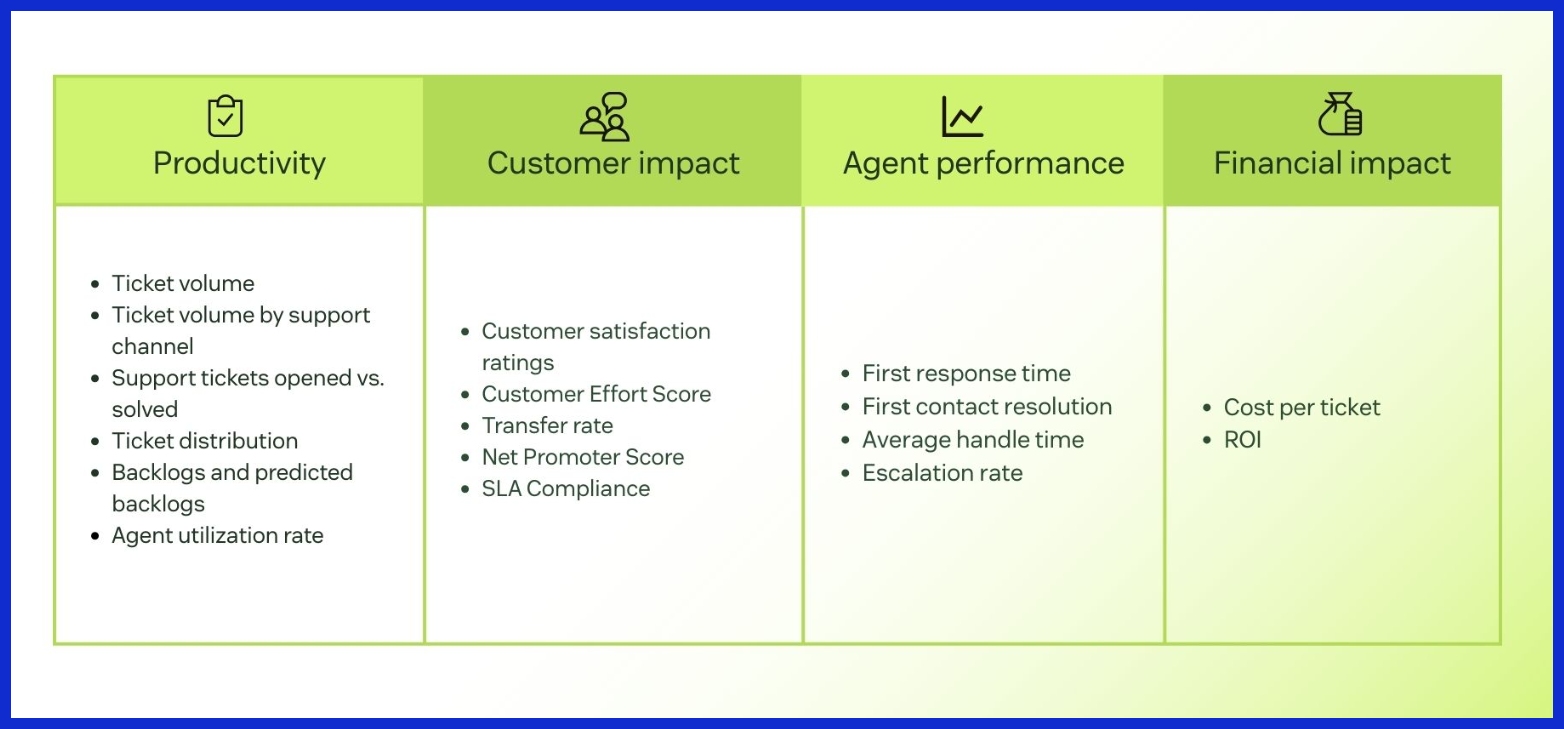
Team efficiency depends on metrics such as response times and resolution rates. These fast first response time and lower average resolution time numbers indicate the team is assisting customers quickly.
By tracking workload for each agent, managers can identify bottlenecks and even out tasks. First contact resolution rates reveal whether problems are resolved on the initial attempt. Higher rates are an indicator of talent and transparent workflows.
These figures assist managers in developing training programs to enhance consistency and performance.
5. Resolution Quality

Resolution quality isn’t just about swiftness. Customer feedback and follow-up surveys help rate if solutions really work. If customers call back about the same thing, it usually means the initial solution didn’t hold up.
Teams leverage these insights to refine their processes and coach agents. Quality assurance holds a high bar and ensures that customers depart pleased, not merely served.
Building Your Measurement Strategy

A clever measurement plan renders customer service more efficient and simple by utilizing key customer service metrics. It contributes to the decision-making process by helping companies focus on real business problems, avoid distractions, and use customer experience metrics to shape better customer experiences. Selecting the appropriate metrics, tools, and review schedules lays the foundation for growth and improvement.
-
Select 3 to 5 metrics that align with your business objectives and address obvious problems. This emphasis keeps teams from drowning in metrics and allows them to monitor their advancement.
-
Choose tools and technology that accommodate your current infrastructure for seamless data capture and effortless cross-channel analysis.
-
Establish baselines for your metrics. Leverage historical data to understand how things evolved and identify trends.
-
Check your results frequently and shift your approach as your business or customer needs evolve.
Define Goals
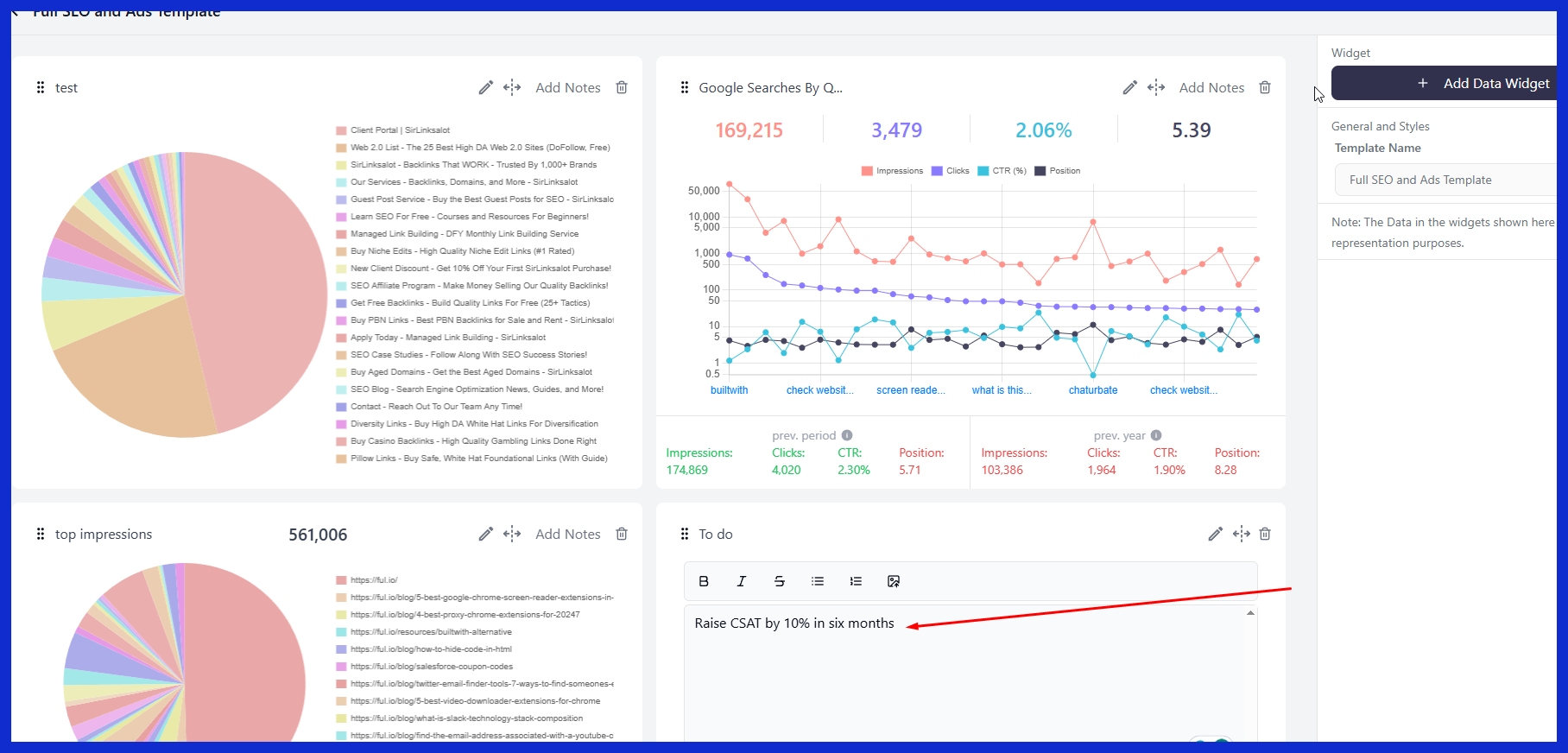
Define actual, measurable goals for customer service. Goals should be specific, for example, “raise CSAT by 10% in six months,” not fuzzy. Tie these targets to wider business strategies so everyone stays aligned, for example, connecting better response times to increased retention.
Tell your goals to the customer service team so they are all on the same page. Be sure to review goals consistently and adjust them as your business evolves or if customer needs evolve.
Select Tools
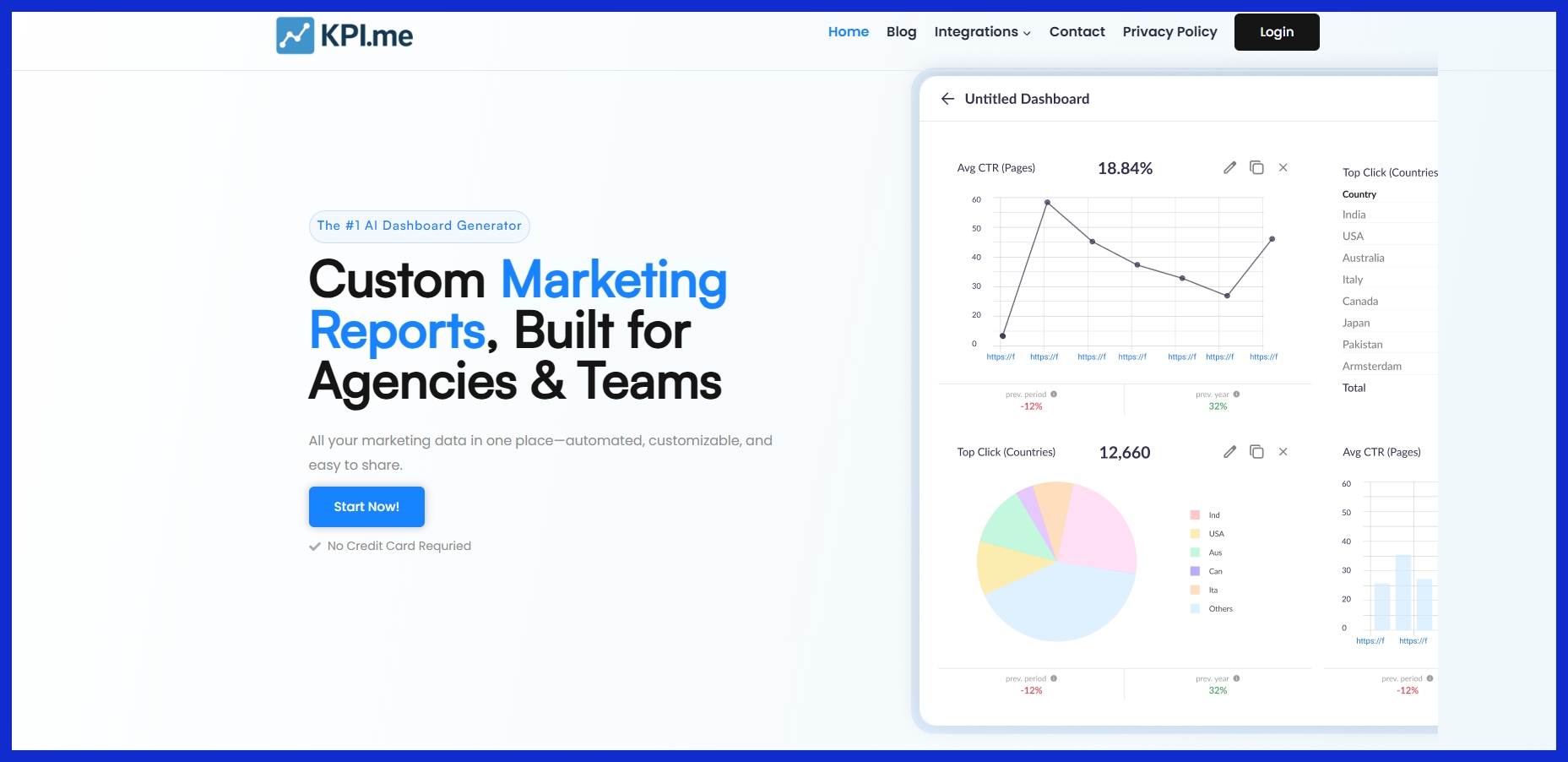
Choose customer service software that integrates nicely with what you already use. For instance, integrating your helpdesk with your CRM can provide a panoramic view of every customer’s journey and highlight agent performance.
Leverage analytics tools that allow you to identify patterns, trends, and service gaps. Dashboards and reports help you detect issues faster. Include survey tools for feedback, such as rapid CSAT or NPS surveys subsequent to support engagements, to find out how customers feel.
Ensure these provide you with real-time information, so you can respond quickly should issues arise.
Beyond The Numbers
Customer service is a critical business driver, and key customer service metrics like response time and resolution rates matter. However, these metrics only scratch the surface. To truly understand customer experience, it’s essential to dig deeper into customer voices and emotions, as well as the larger context of each interaction. This section explores how to combine qualitative feedback and sentiment analysis for a more holistic view of service quality.
Qualitative Feedback
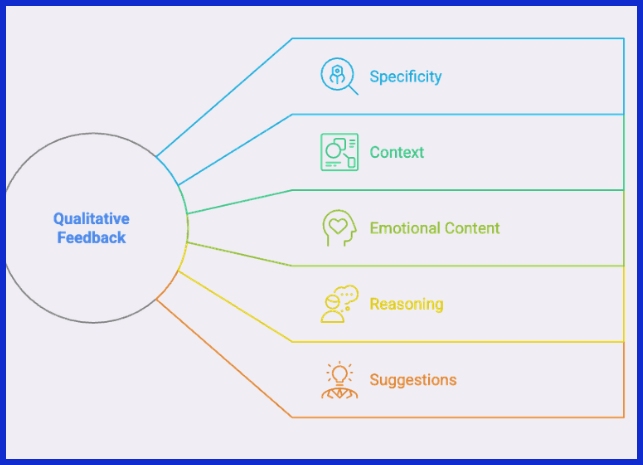
Open-ended feedback from customers is invaluable for understanding customer experience metrics. Comments, whether from post-interaction surveys or unsolicited messages, reveal where customers feel supported or let down. For example, a customer might highlight how a prompt first reply made them feel valued or express frustration with being transferred multiple times between agents.
As you analyze these comments, patterns related to customer satisfaction scores begin to emerge. Perhaps delays are a common issue, or maybe customers appreciate the empathy shown by a particular agent. Discussing these themes with teams can help identify areas for service improvement, such as enhancing response times or managing complex customer issues more effectively.
Regularly seeking and responding to feedback ensures that you stay attuned to what matters most in customer journeys. This alignment with evolving expectations can lead to significant changes, such as optimizing workflows to improve customer service performance and increase first contact resolution rates.
Sentiment Analysis
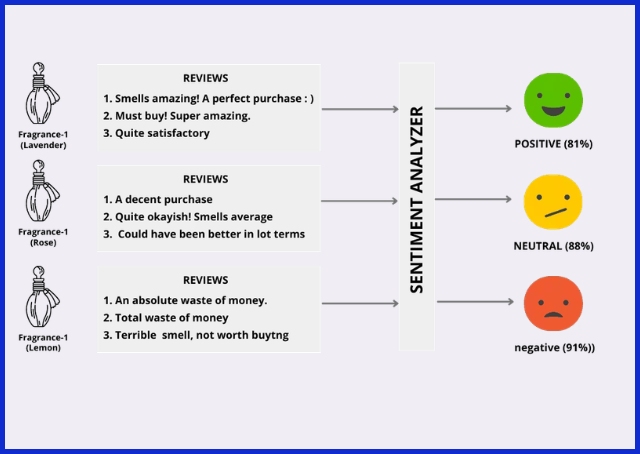
Sentiment analysis tools enable companies to read between the lines of customer feedback, providing valuable insights into customer perceptions. These tools sift through text, searching for signs of satisfaction, frustration, or indifference. For example, if customers are reportedly using strong negative connotations about wait times, it’s a red flag that you should accelerate your responses to improve customer service quality.
Tracing sentiment over time detects trends that won’t necessarily appear in traditional customer experience metrics. Perhaps customer satisfaction scores dip following a policy change or increase when new training is launched. Sentiment data, combined with other key customer service metrics such as CES or FCR, completes the picture of support excellence.
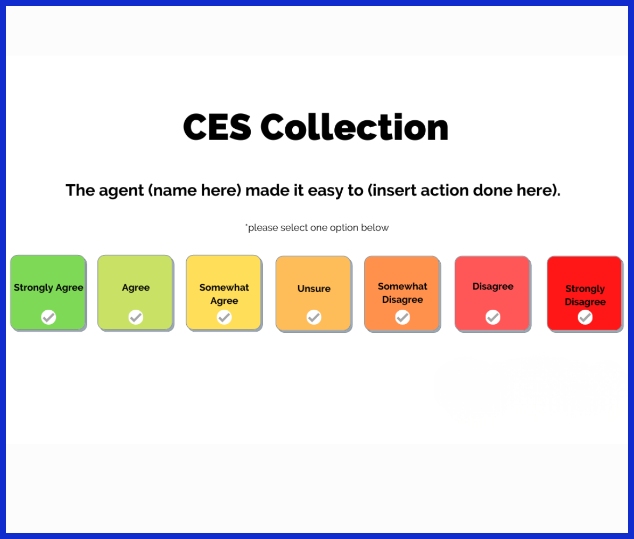
When 90% of customers claim a fast response is critical, sentiment analysis shows lingering frustration. It’s time to investigate. This insight can help direct both agent training and service improvement initiatives.
Contextual Data
Context is king in every customer service interaction. Gathering contextual information, information about the customer, their journey, and the exact situation, simplifies this process and helps you understand why some interactions succeed and others fail.
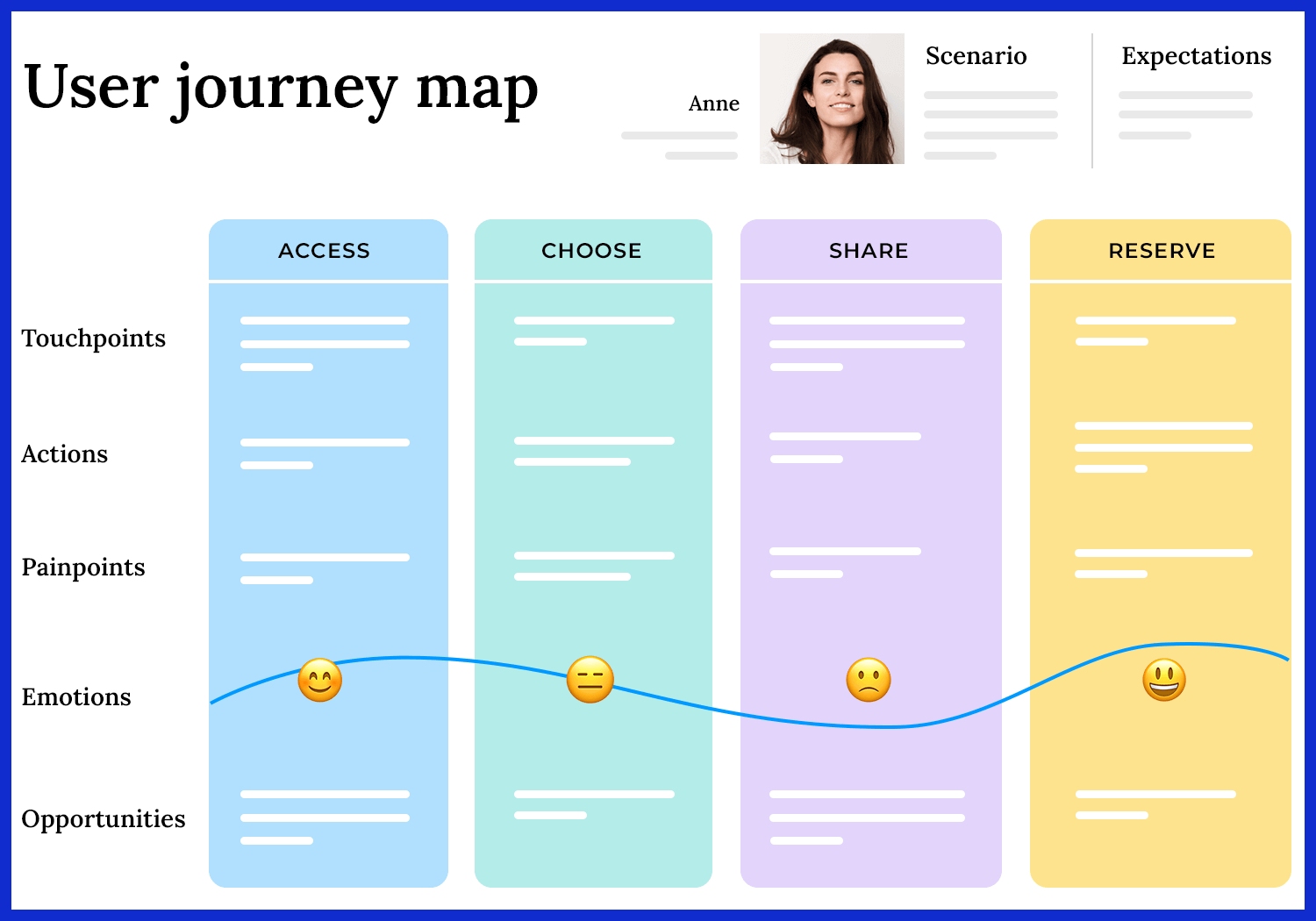
Journey mapping links the dots between touchpoints, enabling teams to understand where customers encounter friction or feel abandoned.
Conclusion
To follow customer service, metrics assist, but they do not reveal all. Fast responses, warm voices, and concise solutions are all memorable. Metrics such as first reply time or customer feedback provide real indications. Real happy customers come from real care, not just data. Great teams use the numbers to identify gaps, then hear and do. That establishes confidence. Wicked leaders glance at reports, then sit down by the team. They detect successes and failures, then adjust what fails. To keep up, teams need tools that reveal the whole story with less effort. Want to see how you compare? Try monitoring your own support with a basic dashboard like KPI.me. Observe for any impact and spread the victories.
Frequently Asked Questions
What are customer service metrics?
Customer service metrics, such as customer satisfaction scores and key performance indicators, are essential for monitoring and evaluating the effectiveness of customer support teams, providing valuable insights into customer experience.
Why are customer service metrics important?
Customer experience metrics indicate how well a company serves its customers. These key customer service metrics allow you to see what’s working and what isn’t, enabling better data-driven decisions to delight your customers and ensure exceptional customer experiences.
Which are the most common customer service metrics?
Popular customer service metrics, such as CSAT and NPS, offer valuable insights into customer satisfaction scores and overall service quality.
How can I choose the right customer service metrics?
Select customer experience metrics that align with your business objectives and customer expectations. Consider what is most important to your customers, whether it is fast replies, solving problems, or delivering exceptional customer experiences.
What should I avoid when measuring customer service?
Don’t just look at the numbers; consider key customer service metrics alongside customer input. Pair quantitative metrics with qualitative insights for a full picture.
How can customer service metrics improve business outcomes?
Monitoring these customer experience metrics allows you to detect issues early, refine team training, and ultimately increase customer satisfaction scores. This results in enhanced loyalty, more positive reviews, and business growth.
What is the future of customer service analytics?
The future features intelligent tools, automation, and analytics, enabling businesses to harness AI and real-time information to enhance customer experience metrics and provide tailored support.